Complete Overview of the 5 Sectors in the Tourism Industry


- The tourism industry has five core sectors: accommodation, transportation, food & beverage, recreation and attractions, and travel services.
- All sectors must adapt to autonomous AI, sustainability, and regenerative travel experiences.
- Travel services act as the connective tissue linking tourism products and customer demand.
- Recreational services boost tourist satisfaction and local economies, driving repeat visitation.
Would you prefer to listen rather than read?
The tourism industry sectors are among the most dynamic in the global economy. Each one goes through comprehensive changes and is subject to many factors.
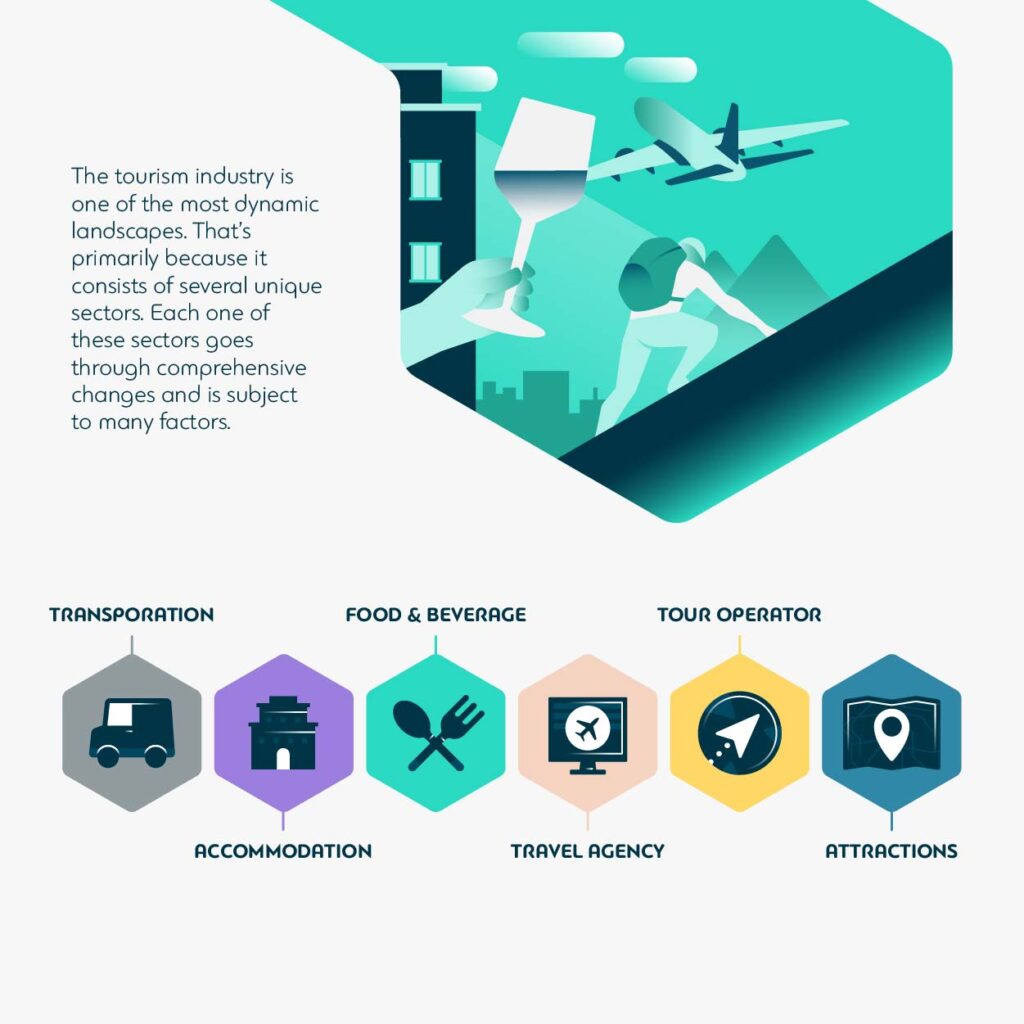
Nevertheless, understanding these sectors is quite essential. Why? Because it can help you make informed business decisions, identify valuable growth opportunities, future-proof your travel brand, and, ultimately, set it up for success.
Today, tourism is one of the world’s leading economies. It contributed 10.3% of global GDP and generated more than $11 trillion in economic output in 2025 – and all this while employing over 370 million people worldwide, according to the World Travel & Tourism Council (WTTC).
That’s because the industry encompasses various segments that work together to create a seamless travel experience. These tourism sectors include transportation, accommodation, food and beverages, recreation and entertainment, and travel services. Let’s dive deeper into each of these sectors to understand their impact and significance.
Overview of the Sectors in Tourism
The tourism vertical is quite extensive and remains one of the most diverse industries globally. It is dominated by five key sectors: transportation, accommodation, food and beverage, travel intermediaries (agencies and OTAs), and recreation and attractions. Let’s take a closer look at the sectors, their sizes, and their economic impact.
Transportation in Tourism
Transportation in tourism is a big sector. It encompasses a wide range of travel modes and enables tourists to reach their destinations safely and efficiently. The sub-sectors include air travel, land transportation and maritime travel, each playing a vital role in the tourism sector. Efficient and reliable transportation services are essential for a positive travel experience.
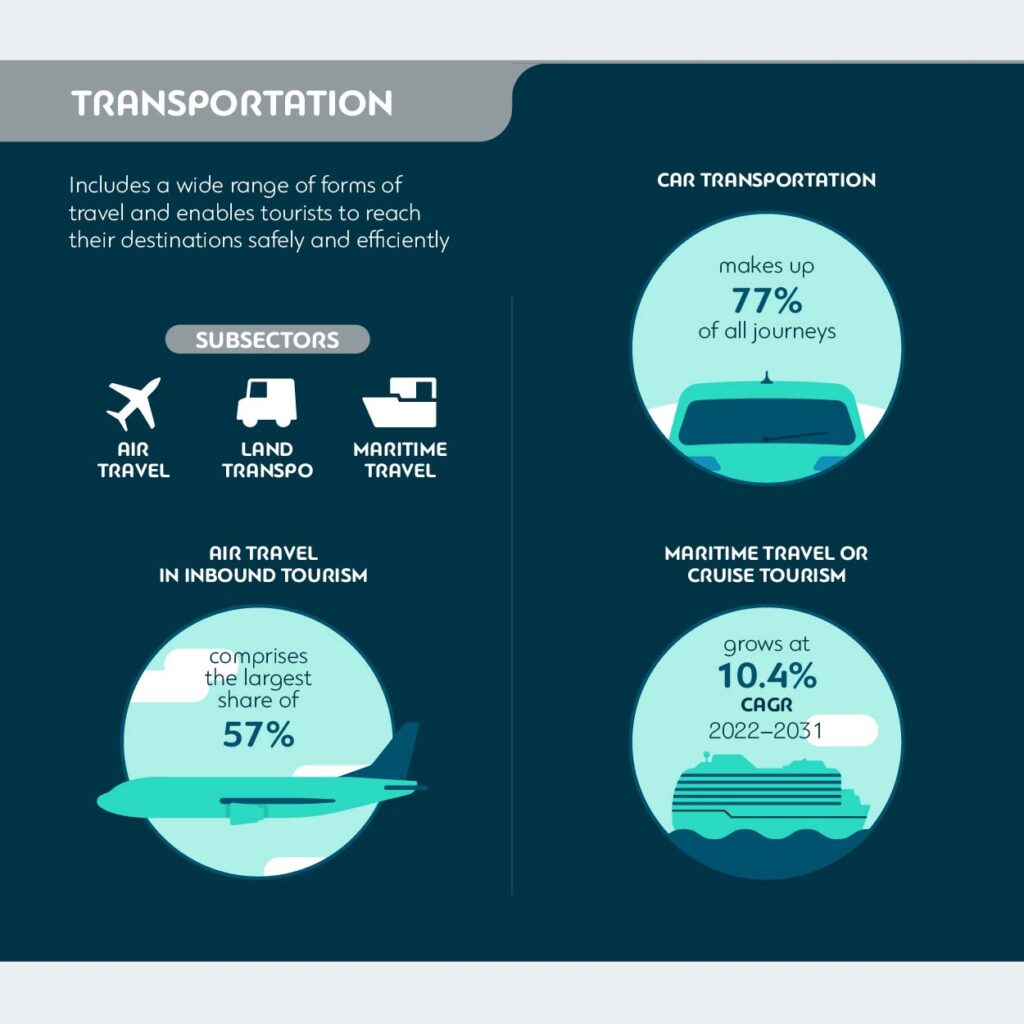
Air travel accounts for the largest share of inbound tourism: historically, around 57% to 59% of inbound traffic comes in by air, based on the UN Tourism Data Dashboard. We could gauge the momentum of the tourism sector by looking at air transportation trends, which have fully recovered to pre-pandemic levels and are now in an expansion phase. The latest IATA reports state that total air traffic grew by 5.3% in the first nine months of 2025 compared to 2024, with passenger numbers projected to reach an all-time high of 5.3 billion in 2026.
Land transportation for tourists has been increasing in recent years. It’s a widely cited industry benchmark that car transportation makes up 77% of all journeys – a figure that remains consistent through the years. The reasons that explain this trend are flexibility, price, and independence.
Maritime travel or cruise tourism is also experiencing steady growth. This subsector is estimated to continue to grow at a CAGR of 12.9% from 2025 to 2030, according to Grand View Research.
Transportation is one of the pillars of the tourism industry, and as such, it has a tremendous economic impact on the vertical – its efficient functioning is critical not only for attracting visitors, but also for making it easy and convenient for them to explore and move around the destination.
Accommodation in Tourism
All the lodging options tourists can choose from comprise the accommodation subsector of the tourism industry. It includes hotels, resorts, hostels, vacation rentals, Airbnb, and more.
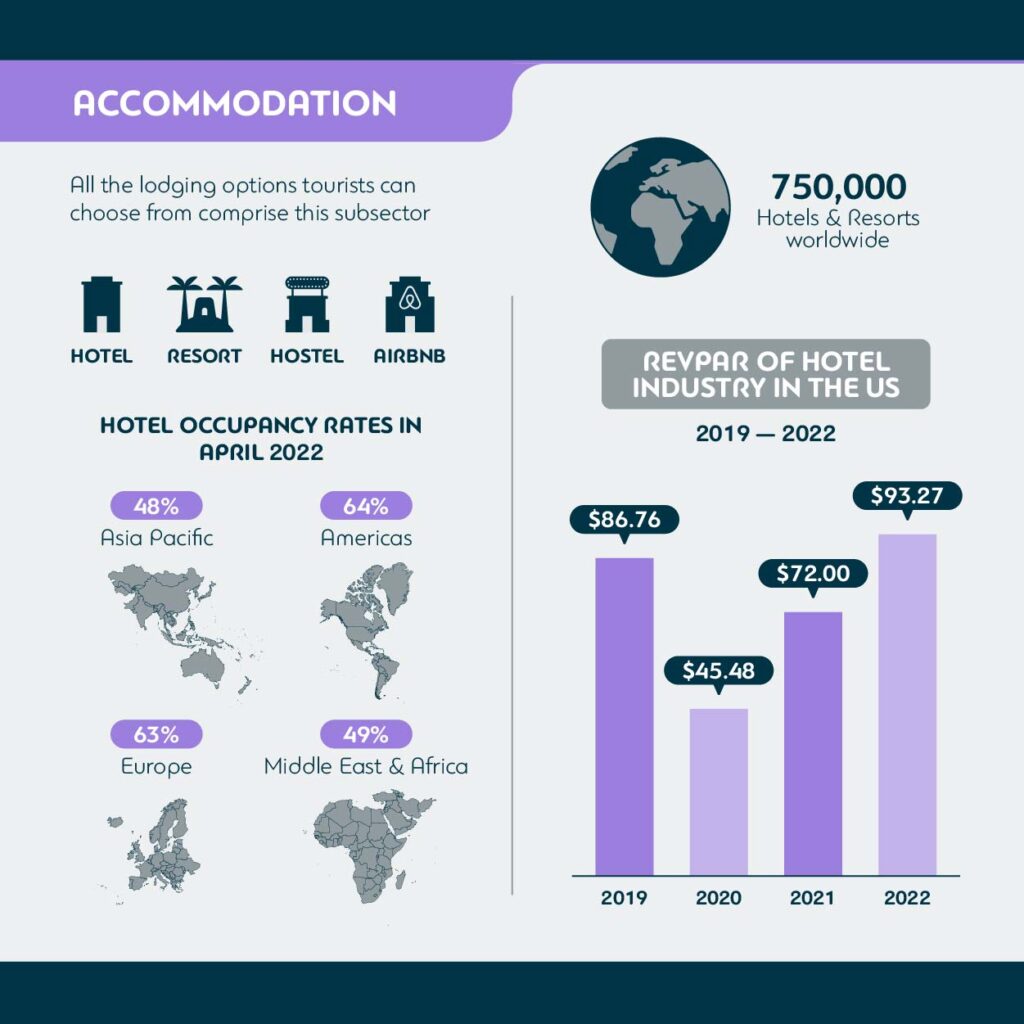
With over 187,000 hotels and hundreds of thousands of additional resort properties worldwide, the best way to keep track of the developments in this sector is by using the hotel occupancy rate metric. In mid-2025, global hotel occupancy rates have settled at 69% to 71% during the peak summer months. Europe and the Americas continue to lead in occupancy, often exceeding 63% to 65%, while the Asia-Pacific region is growing fastest, according to the 2025 State of the Industry Report by American Hotel & Lodging Association (AHLA).
When it comes to the economic impact, the best metric to track is revenue per available room or RevPAR, which is expected to break all records with $102.78 by 2025. The Average Daily Rate is also up due to inflation and high demand, and has reached a new regional peak in the US at approximately $162.16 (AHLA, 2025). While occupancy in some markets is still below 2019 peaks, the sector’s total revenue has officially surpassed pre-pandemic levels.
The revenue this sector generates has a tremendous impact. The funds are redirected toward creating new jobs, developing infrastructure, and boosting local economies. Local communities and governments also benefit from the taxes and fees collected from accommodation providers.
Food and Beverage in Tourism
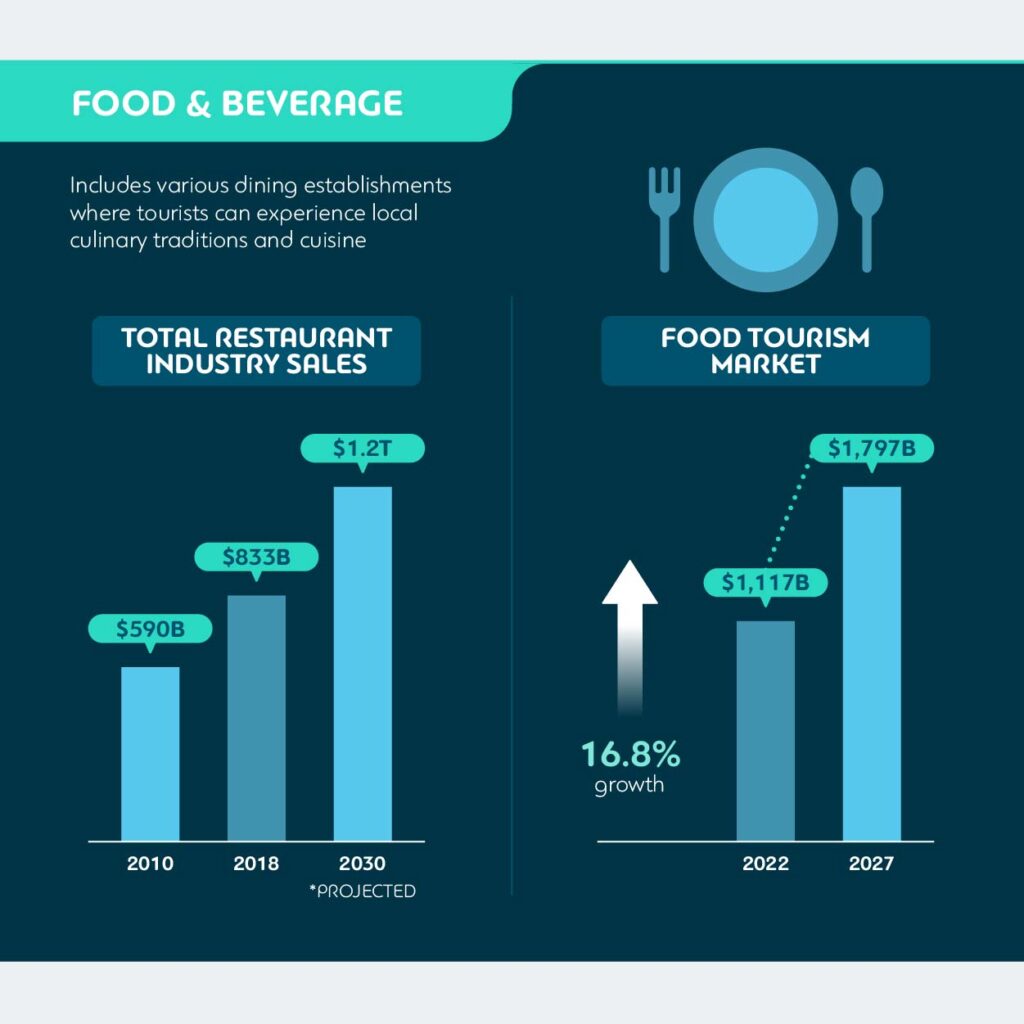
The food and beverage tourism sector is very diverse and doesn’t just include restaurants and cafes. It also encompasses various dining establishments where tourists can experience local culinary traditions and cuisine.
Travel and tourism are primary drivers for the restaurant industry. In the US, they account for 3 in every 10 dollars spent at restaurants, according to the 2025 State of the Industry report by the National Restaurant Association. Fine dining depends on tourism traffic, with visitors making up about 41% of total sales.
Total restaurant industry sales are projected to reach a landmark $1.1 trillion in 2025 and continue growing toward $1.2 trillion by 2030. Traveler purchases are significantly contributing to this development. According to the 2025 Allied Market Research report, the global culinary tourism market is growing at a fast rate; it is projected to reach $1,796.5 billion in size by 2027, with a robust CAGR of 16.8%.
In one of the most extensive recent studies, food is cited as the “ultimate cultural ambassador.” According to the 2025 Hilton Trends Report, around 50% of global travelers now book restaurant reservations before securing their flights. American Express data shows a similar trend: 72% of travelers rank the “food and social scene” as a top-three factor in their destination choice.
There are two sides to the economic impact of food and beverage in tourism. First, it helps generate more direct revenue, and second, it fosters culinary entrepreneurship and can significantly boost agricultural and food production sectors. It can also help create more job opportunities.
Travel Agencies and Tour Operators
Travel agencies are travel brands that specialize as intermediaries. They provide tourists with access to accommodation and other tourism options. Travel agencies can also offer various services, such as tour packages, accommodation reservations, and transportation booking.
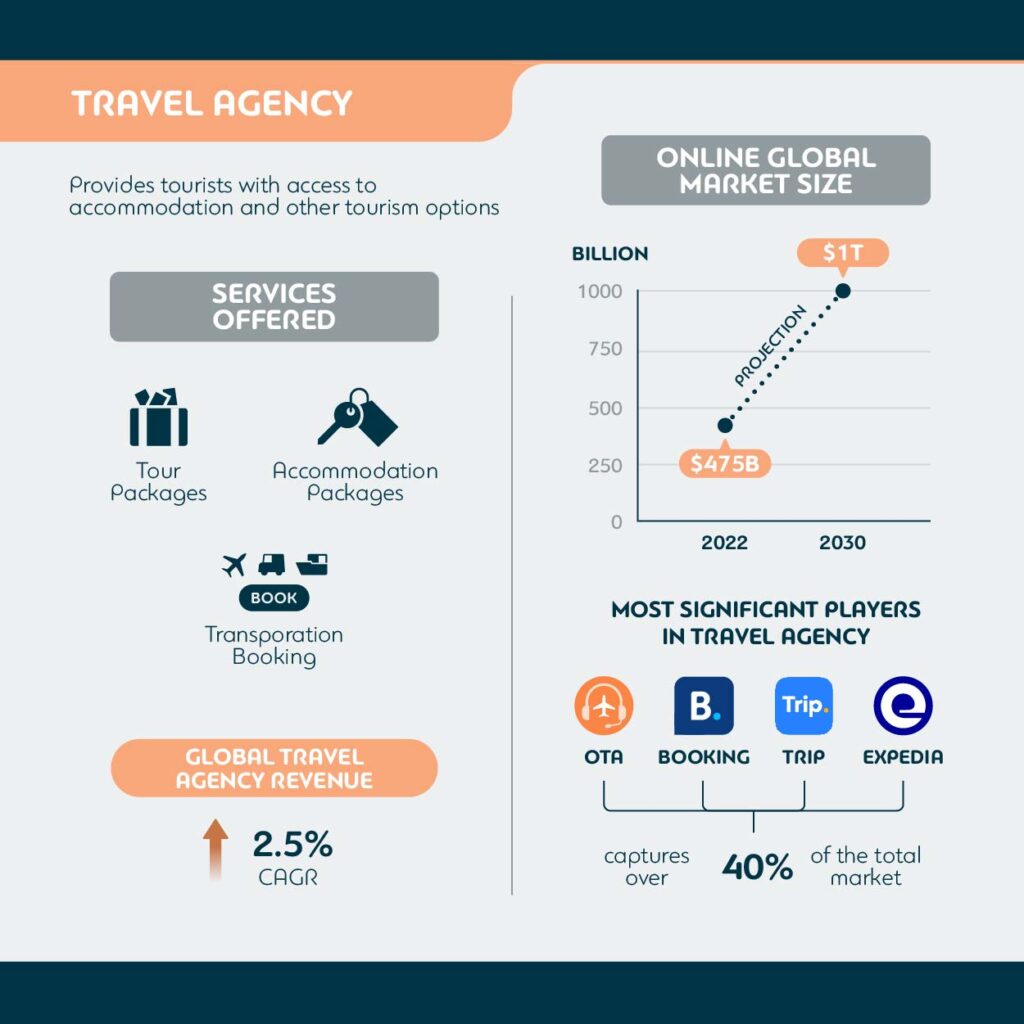
Online travel agencies (OTAs) currently dominate this space. By 2024, the global OTA market reached $612.95 billion; the 2024 Online Travel Agencies Market report by Grand View Research projects it will surpass $1 trillion by 2030. Major players like Booking Holdings, Expedia Group, and Trip.com Group have strengthened their position, as online platforms now capture around 45% to 50% of all global travel bookings, according to Market Growth Reports 2025.
While travel agencies continue to generate revenue, it’s important to note that the sector is evolving through technology; global travel agency revenue is now projected to grow at a CAGR of 8.6% through 2030, driven by mobile app adoption and AI-driven personalization (Grand View Research, 2024).
Travel agencies, both offline and online, are vital parts of the entire travel ecosystem. They both contribute to the whole sector and facilitate tourism overall. Travel agencies stimulate economic activity through other sectors as they are responsible for actually funneling tourists to destinations. They also help create new jobs, improve travel satisfaction, and ensure repeat business.
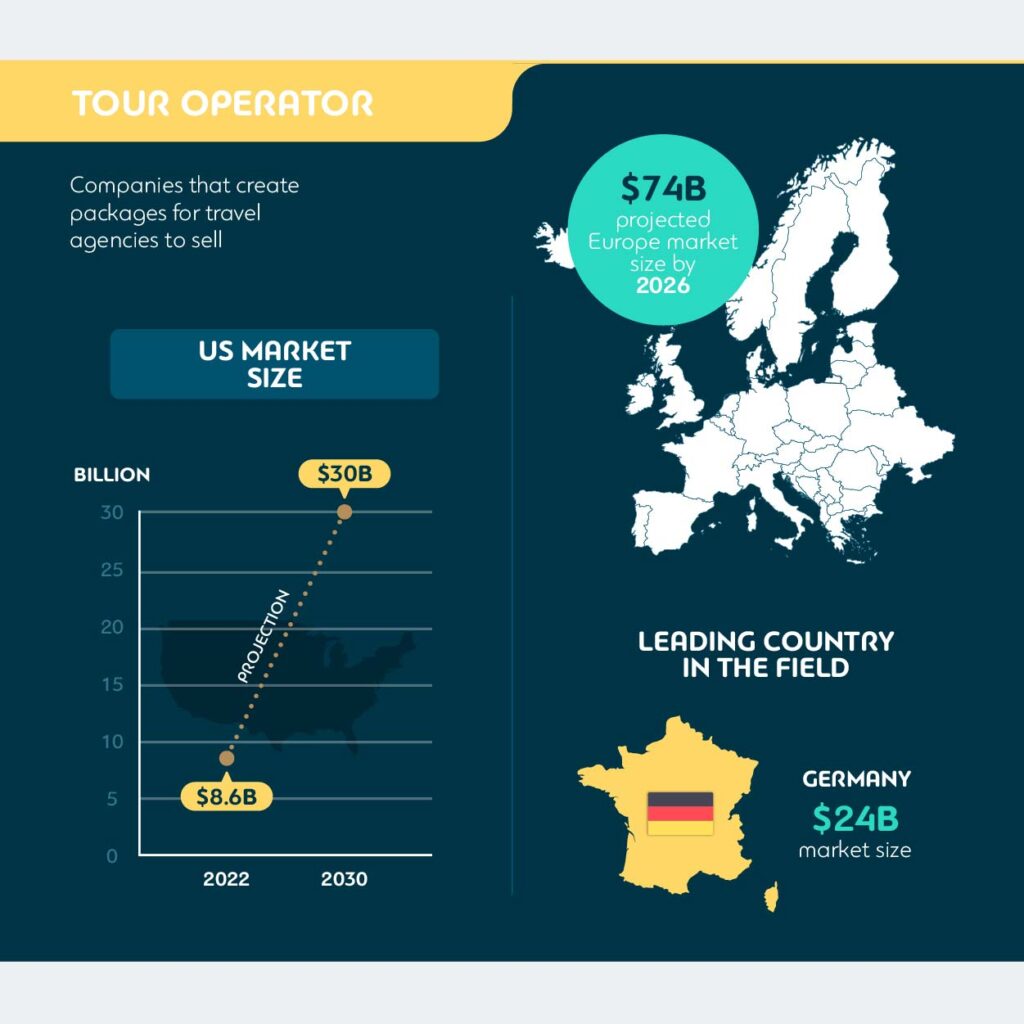
Tour operators, the companies that create packages for travel agencies to sell, also make up a sizable sub-sector. In the US, the tour operators market was valued at $8.1 billion in late 2023 and is expected to reach $31 billion by 2032, growing at a CAGR of 17% (Zion Market Research, 2025). Across the ocean, a ReportLinker report predicts that the European tour operator market will reach €74.7 billion by 2026. Germany will likely maintain its position as the leader.
Tourism Attractions
A tourism attraction is a place tourists visit for its beauty, culture, or unique significance. Generally speaking, tourism attractions’ primary role is to draw tourists to a particular destination. It can be anything from natural wonders and historical sites to museums and cultural landmarks.
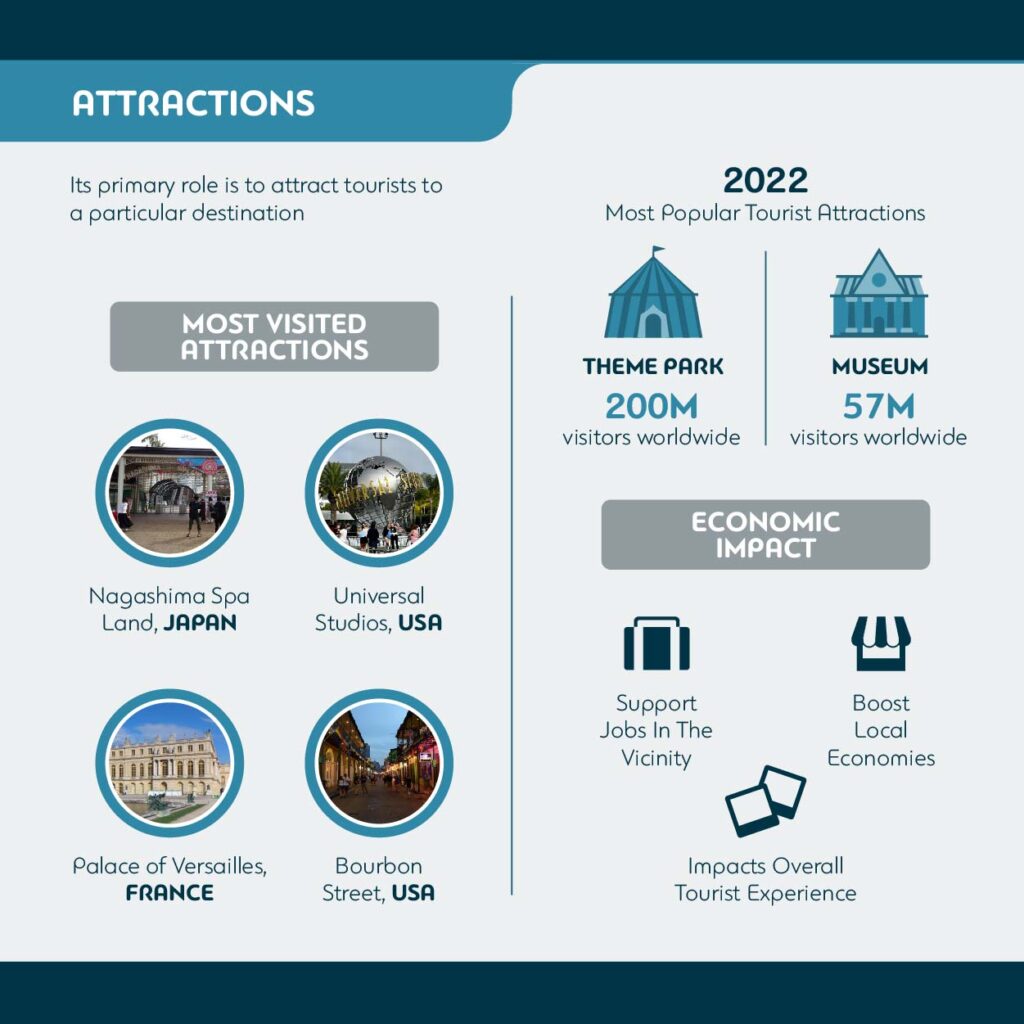
According to the latest data, the most visited attractions are spread across the globe but located in well-established tourist hubs. The TEA Global Experience Index 2024 names the Louvre Museum in France, the Magic Kingdom at Walt Disney World in the USA, and Universal Studios Japan as the world’s most popular attractions.
Theme parks are growing steadily again. In 2024, the top 25 theme parks worldwide attracted nearly 246 million visitors, 2.4% more than the year before (TEA 2024). Museums have a major appeal for international travelers; the world’s top 20 museums saw a notable increase in attendance. They are led by the Louvre with 8.7 million visitors and a surging museum market in China, where 14 of the top 20 global museums are located (TEA, 2024).
Tourism attractions also have a significant economic impact. They support jobs in the vicinity, boost local economies, and positively impact the overall tourist experience. They are also the number one factor that often drives visitation.
The Interplay of Sectors in Tourism
The most important thing to understand about the structure of the tourism industry is that its sectors are not separate from each other. In fact, the interaction between them is complex and occurs at many different levels.
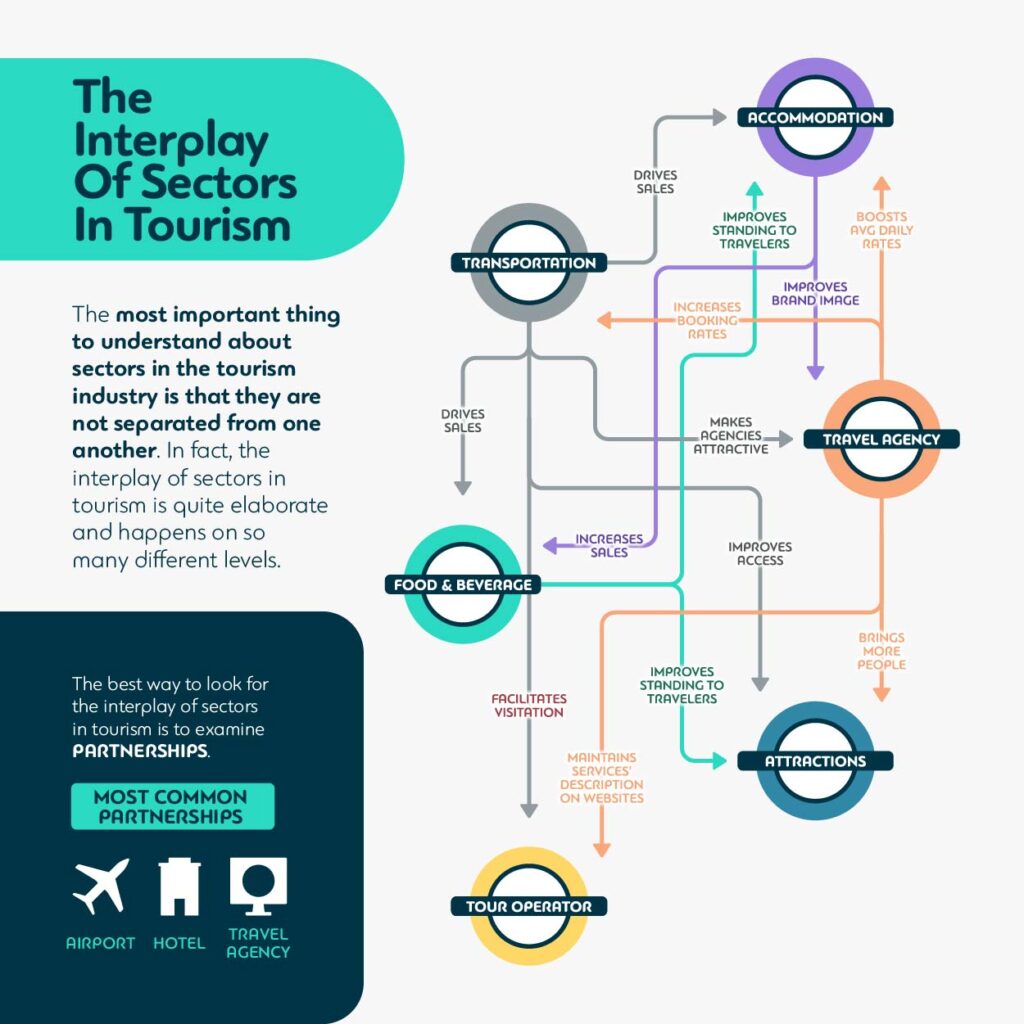
Let’s start with transportation. The affordable, dependable, and reliable means of transportation can facilitate visitation. Transportation is also responsible for the tourist experience. It can improve access to tourism attractions, make tourism agencies more attractive, and drive sales in the accommodation and food and beverage sectors.
Accommodation in tourism often interplays with travel agencies. It can help improve the brand image of a travel agency by enhancing the stay experience. It can also lead to increased food and beverage sales if the hotel or a resort has its own facilities, such as a restaurant or bar. In return, the food and beverage sector can improve the standing of accommodations and destinations in the eyes of travelers.
Travel agencies interplay with all of the sectors. The services they offer have to live up to the descriptions found on the websites. They can help boost the average daily rates for accommodation providers, increase booking rates at transportation companies, and bring more people to attractions.
The best way to look for the interplay of sectors in tourism is to closely examine industry partnerships. The transportation, accommodation, and other various travel brands have recognized the value of the interplay and decided to partner up to reap even more benefits. Nowadays, digital integration and sustainability play a central role in these collaborations.
The most common are partnerships between airlines, hotels, and travel agencies. It enables airlines to remain competitive while helping hotels and travel agencies maintain high customer satisfaction and an enhanced travel experience.
One example that comes to mind is Wilderness (formerly Wilderness Safaris)’ partnership with Qatar Airways. Initially launched in 2021 and extended following immediate success, this partnership highlights conservation and high-end logistics. The big hospitality brand wanted its guests to arrive well-fed and rested, ready to engage in adventures in the great outdoors. Given that Qatar Airways has consistently earned high marks in the catering and business class areas, it was the obvious pick for Wilderness. As part of this initiative, Wilderness has even planted thousands of indigenous trees at Bisate Lodge in Rwanda for every Qatar Airways booking made through the program.
Another real-world example is AEGEAN’s partnership with Booking.com. Here, we have a transportation company and an OTA joining forces to reap unique benefits. AEGEAN, an airline brand, wanted its customers to be able to conveniently check hotel availability in real-time, book accommodation at competitive prices, and benefit from friendly cancellation policies.
To encourage travelers to choose AEGEAN services through Booking.com, the company also uses its Frequent Flyer Program, Miles+Bonus, to award consumers extra miles with every hotel booking made through the dedicated portal.
Impact of Each Sector on the Tourism Industry
As one of the largest industries, the tourism vertical supports over 10% of all global jobs and supports around 371 million positions in 2025 (WTTC, 2025). All sectors participate in job creation and contribute to global travel and tourism GDP that is set to reach an all-time high of $11.7 trillion this year (WTTC, 2025).
The accommodation and food and beverage sectors have a significant impact on the tourism industry, as well. In the United States, the accommodation and food services sector remains a key pillar of the economy. It contributes just over 3% of national GDP and serves as the nation’s second-largest private employer, according to the MMCG Invest report from 2025.
The global hotel and other travel accommodation market is projected to grow from $1.27 trillion in 2024 to $1.35 trillion in 2025. (The Business Research Company, 2025). This represented a CAGR of 6.0%, a growth driven largely by the rise in disposable income and the expansion of mobile booking applications (Research and Markets, 2025). Asia-Pacific has emerged as the largest regional market, while North America remains the fastest-growing region for new lodging investments (The Business Research Company, 2025). The global hotel and resort industry currently employs approximately 10.5 million people.
The global travel agency services industry’s revenue has surpassed previous benchmarks and reached an estimated $465 billion in 2025 (The Business Research Company, 2025). Travel agencies in the US are reporting renewed demand. While the Bureau of Labor Statistics tracks approximately 65,700 “travel agents,” the American Society of Travel Advisors (ASTA) notes that the broader network of advisors, including independent contractors, represents nearly 310,000 professionals in the United States. Globally, travel agencies remain vital to industry growth: the traditional agency market alone is projected to reach $195.5 billion by 2029, according to Condor Ferries.
Challenges and Opportunities in Each Sector
While every industry and sub-sector is unique, they all share a few things in common. In 2026, global tourism is defined by a shift from digital experimentation to a more mature adoption of AI agents – autonomous systems that can handle entire guest journeys – alongside a rising demand for regenerative sustainability. Let’s see what challenges and opportunities there are in each sector.
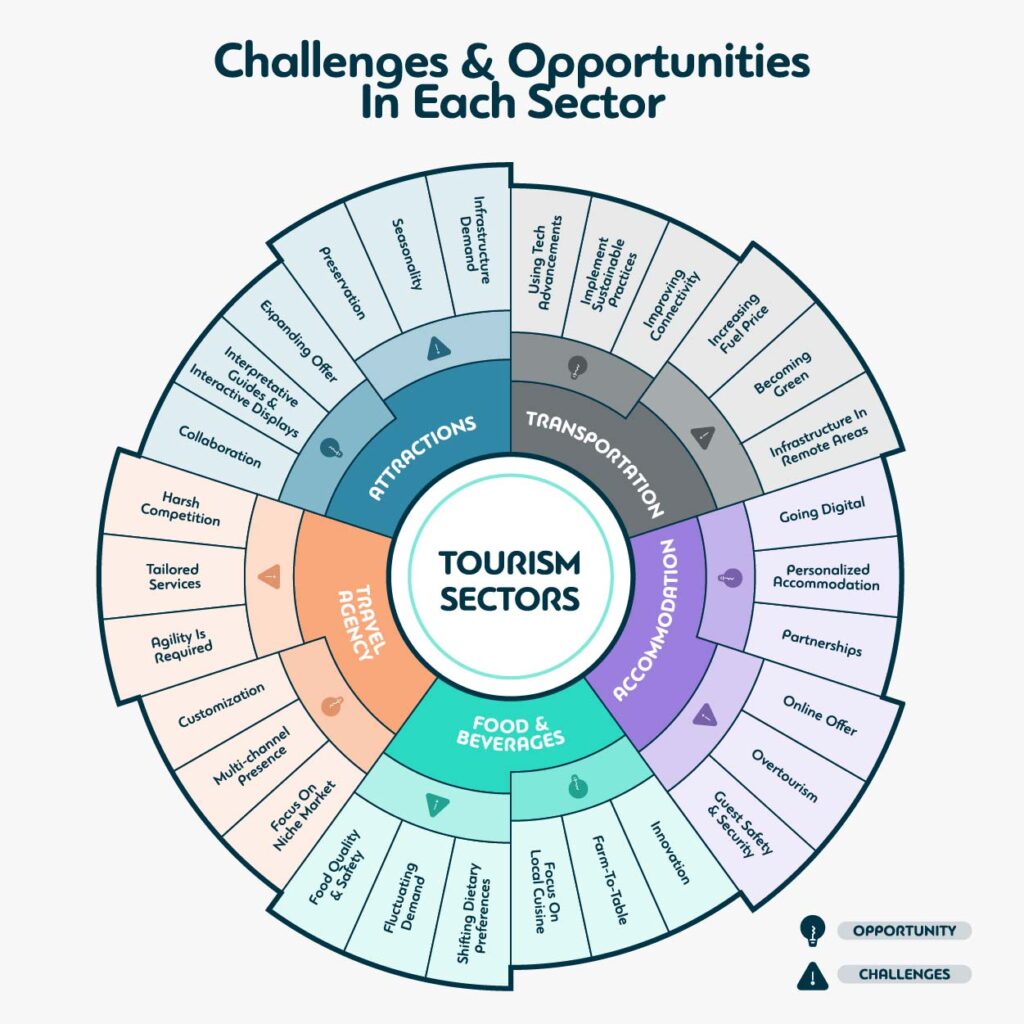
Transportation in Tourism
Challenges:
- Ever-increasing prices of fuel – To remain profitable, airlines need to manage operational costs, particularly as SAF (Sustainable Aviation Fuel) mandates begin to impact pricing structures.
- Becoming green – Transportation companies need to reduce carbon emissions and adopt sustainable travel practices, such as the new 2026 zero-emission requirements for ships and ferries in World Heritage fjords.
- Infrastructure in remote destinations – Building roads and developing infrastructure can be challenging in remote destinations that are in higher demand now that many travelers are avoiding overcrowded tourist hubs.
Opportunities:
- Using technological advancements – Transportation technologies can help improve customer experience and operational efficiencies through AI-driven predictive logistics that minimize weather-related delays.
- Implementing sustainable practices – Becoming eco-friendly can help brands attract environmentally conscious travelers and comply with strict European maritime decarbonization rules.
- Improving connectivity – With connectivity expansion, transportation brands can help local economies and create new tourism opportunities by opening direct routes to emerging markets like Central Asia and Eastern Europe.
Accommodation in Tourism
Challenges:
- Online offer – As more and more competitors join online marketplaces, accommodation providers need to embrace a new paradigm.
- Overtourism – Limited accommodation capacity is a massive problem in destinations where overtourism is the norm.
- Guest safety and security – In some situations and locations, accommodation providers can struggle with ensuring guest safety and maintaining a seamless, non-intrusive experience at the same time.
Opportunities:
- Going digital – Embracing cutting-edge technologies like personalization at scale allows hotels to use AI to curate individualized room settings and itineraries before a guest even arrives.
- Personalized accommodation – Offering boutique and experiential lodging can help accommodation providers cater to modern travelers who increasingly prioritize meaningful travel over simple leisure.
- Partnerships – Aligning with relevant companies and local brands can help providers attract more travelers and build integrated loyalty ecosystems that offer value across the entire travel journey.
Food and Beverage in Tourism
Challenges:
- Quality and safety of food – Upholding the highest food quality and safety standards can be challenging.
- Fluctuating demand – Seasonal destinations can struggle with handling fluctuating food and beverage demand, with ongoing labor shortages that limit throughput in traditional kitchens.
- Shifting dietary preferences – Guests may have diverse dietary preferences, including a sharp rise in “sober curious” and plant-based dining.
Opportunities:
- Innovation – Innovative dishes and fusion cuisines can attract guests, especially when facilitated by practical automation that allows chefs to focus on creativity rather than manual prep.
- Farm-to-table – Cooperating with local farmers can help bring fresh ingredients to restaurants and support the circular economy goals that many travelers expect in 2026.
- Focus on local cuisine – Bringing local dishes into the spotlight can help attract people interested in authentic cuisine.
Travel Agencies
Challenges:
- Harsh competition – Travel agencies have to compete against hundreds of online travel booking platforms and new AI assistants that can generate complete itineraries in seconds.
- Tailored services – Many travelers look for personalized experiences, which can prove hard to provide at scale without the help of AI-integrated CRM systems.
- Agility is required – Getting ready for a wide range of disruptions, such as extreme weather patterns or sudden geopolitical shifts, is costly and difficult to sustain at scale.
Opportunities:
- Customization – Offering unique packages can help generate more bookings, particularly for complex itineraries involving new digital visa requirements like Europe’s ETIAS.
- Multi-channel presence – Being present across online and offline channels is paramount, allowing human agents to act as the quality check for AI-generated logistics.
- Focus on a niche market – Staying focused on a specific travel niche, such as regenerative tourism or high-end wellness.
Tourism Attractions
Challenges:
- Preservation – Sustainable management of tourism attractions can be challenging, as increased demand often leads to mandatory visitor caps and digital-first reservation models.
- Seasonality – If traction generates the majority of the revenue through seasonal visitors, it can be a problem in situations like sudden last-minute cancellations due to unpredictable weather.
- Infrastructure demand – A growing number of visitors can cause infrastructure strain and labor shortages for specialized roles like technical exhibit operators.
Opportunities:
- Collaboration – Partnerships can help create a better ecosystem, such as the community-led models in Mexico that empower indigenous groups to manage their own heritage sites.
- Interpretive guides and interactive displays – Interpretive experiences can delight a wide range of visitors, particularly when immersive virtual tours are used as a demand-management tool to protect sensitive areas.
- Expanding offer – Offering new activities like exclusive MICE events can turn landmarks into year-round revenue drivers.
Conclusion
The tourism industry landscape is quite comprehensive, with a lot of moving pieces on the board, and the best way to understand the vertical is to take a look at its subsectors.
By exploring these tourism sectors, we gain insights into the various elements that contribute to the industry’s growth and sustainability.
The transportation, accommodation, food and beverage, travel agencies, and tourism attraction sectors are all intertwined, with many interplay activities, now increasingly driven by travel automation that gives human professionals the time to curate exceptional, high-touch travel experiences.
While the tourism sector comes with its fair share of challenges, there are also many opportunities. The current stats and projections tell us that all subsectors are prosperous and expected to grow in the foreseeable future, moving further and further away from traditional models and simple consumption toward experiential, regenerative travel that actively improves the destinations we visit.

Subscribe to
our newsletter
Yay! You are now
subscribed to our
newsletter
Mize is the leading hotel booking optimization solution in the world. With over 170 partners using our fintech products, Mize creates new extra profit for the hotel booking industry using its fully automated proprietary technology and has generated hundreds of millions of dollars in revenue across its suite of products for its partners. Mize was founded in 2016 with its headquarters in Tel Aviv and offices worldwide.
Related Posts
The Top 25 Travel Management Companies in the US and Canada
21 min. Business travel in the US and Canada runs on a surprisingly small number of companies, and that number keeps shrinking as the biggest players buy up the rest. For a travel program owner, a supplier, or a technology partner, knowing who actually operates in this market (and who now belongs to whom) is […]

78 Most Influential Travel Industry Events in 2026
109 min. After “revenge travel” and hurried recovery, the global travel and hospitality sector can finally continue where it stopped. But first, a phase of “measured normalization”. We’ve celebrated the industry’s comeback; now, leaders and stakeholders are examining what’s next. This year, travel discussions circle around regeneration, hyper-personalization, and AI. Industry summits are the perfect […]

6 Business Travel Trends Changing 2026 Fast
16 min. After the sharp collapse in 2020 and the gradual recovery that followed, corporate travel in 2025-2026 looks very different from the industry we knew before the pandemic. Figures are recovering – global business travel spending reached $1.48 trillion in 2024 – but travel professionals are facing new complexities. Stuck between richer retail offers […]
